
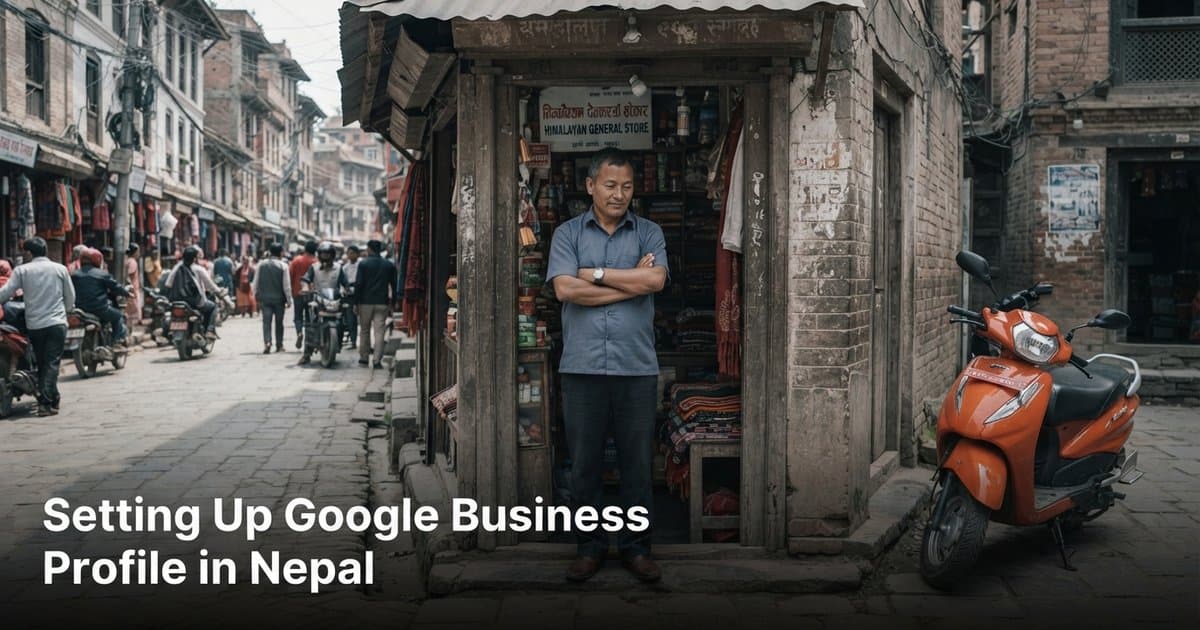
It is free, it appears above the search results, and a large share of Nepali businesses have never claimed theirs. An afternoon's work with a real return.
Key Takeaways
- It is free, it appears above the search results, and a large share of Nepali businesses have never claimed theirs.
- An afternoon's work with a real return.
For a business with customers in a particular place, this is the highest-value free thing available, and an enormous number of Nepali businesses have never claimed theirs.
It is the panel that appears beside search results with your map pin, hours, photographs and reviews. For a local search it sits above the ordinary results, which means it can outperform a website that took months to build.
Claiming it
Search your business name on Google Maps. Often a listing already exists, created automatically or by a customer, with wrong hours and someone else's photograph. Claiming it is better than creating a duplicate.
Verification usually means a postcard to your address with a code, which takes a couple of weeks in Nepal, sometimes longer. Occasionally phone or video verification is offered. Start the process now rather than when you need it.
The fields that actually matter
Most of the form is optional and most of it has little effect. Four things carry the weight.
Category. Pick the most specific one that fits, not the broadest. "Momo restaurant" will serve you better than "restaurant" if it exists, because it matches what people search.
Hours, kept accurate. Including holidays. A customer who travels to a closed shop because Google said open does not check again next time, and may leave a review saying so.
Photographs. Real ones, taken on a phone, of the actual place, updated occasionally. The shopfront so people recognise it from the street, the inside, and the products. Stock photography is obvious and does the opposite of what you want.
The description. Plain sentences about what you sell and where. Not a paragraph about your commitment to excellence.
The address question
Nepali addresses do not fit the form well. Google wants a street address; much of Kathmandu is described by landmark.
Place the map pin accurately first, because that is what actually gets people to you. Then use the address field for the closest usable description, and put the landmark directions in your description and on your website.
If you visit customers rather than receiving them, set a service area and hide the address. You still verify with a real address; it just is not displayed.
Reviews, done properly
Reviews influence both how you rank in local results and whether someone chooses you. They are also where businesses get themselves into trouble.
Ask customers who were genuinely happy, directly, and give them the short link from your profile. Ask a few each week rather than twenty in a fortnight, because a sudden burst looks manufactured and is treated accordingly.
Do not offer a discount in exchange. Do not write them yourself or ask staff to. Both are against the rules and both are easier to spot than people assume.
Reply to every review, including the bad ones. A calm, specific reply to a complaint is read by everyone who comes after, and it does more for you than the complaint does against you.
The mistake to avoid
Do not create multiple listings for the same location to appear more often. It does not work, and it can cost you the listing you have.
One accurate profile, kept current, with genuine reviews accumulating slowly, is the whole strategy. It takes an afternoon to set up and about ten minutes a month to maintain.
Enjoyed this article? Share it with others!
Written by
AntByte Labs
Engineering · AntByte Labs
AntByte Labs is a Engineering at AntByte Labs, sharing expert insights on technology, software development, and digital innovation to help businesses grow.