
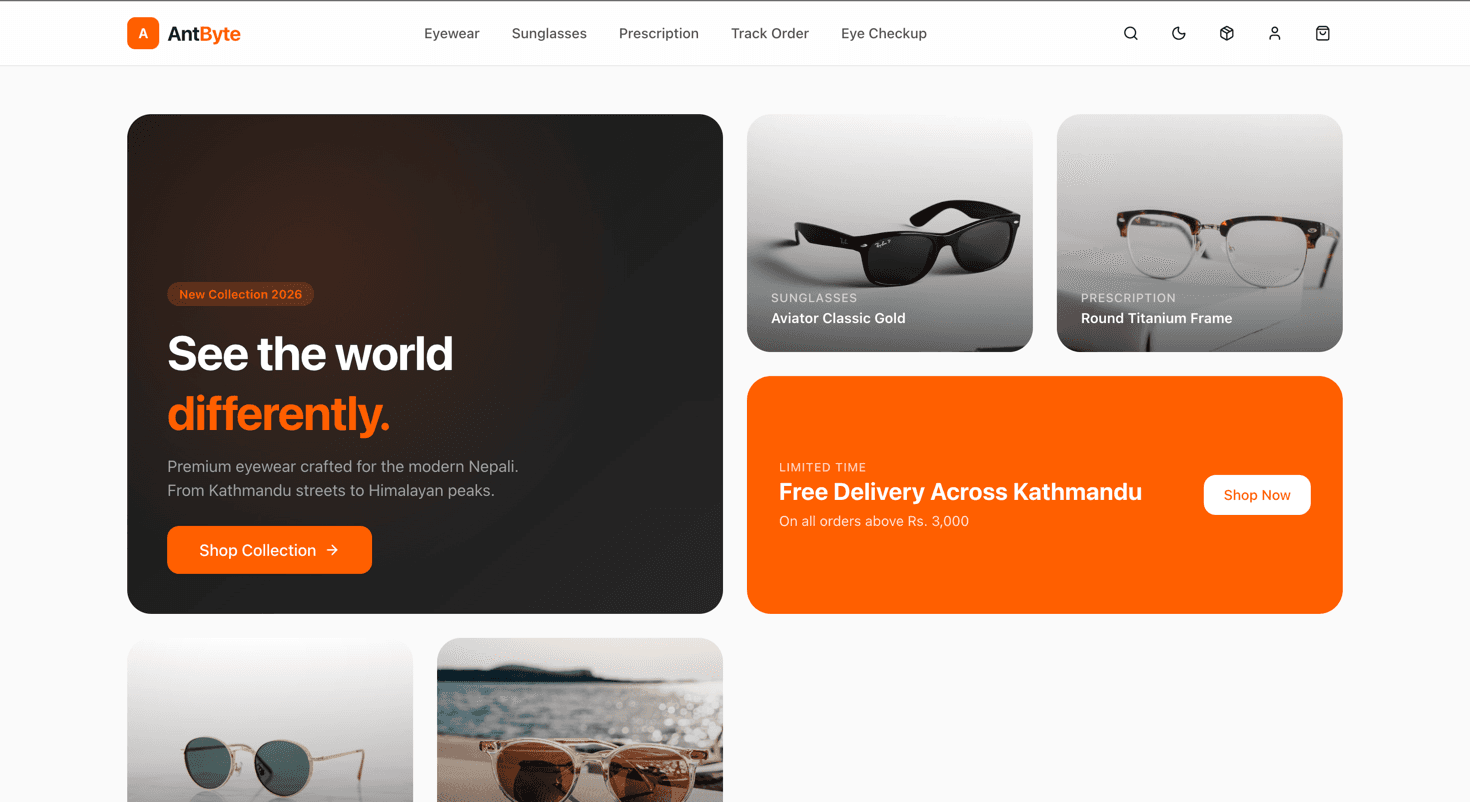
A behind-the-scenes look at how Antbytelabs designed, built, and launched a production-ready e-commerce platform — from first wireframe to live checkout — in just six weeks.
Key Takeaways
- A behind-the-scenes look at how Antbytelabs designed, built, and launched a production-ready e-commerce platform — from first wireframe to live checkout — in just six weeks.
The Brief
A client came to us with a familiar problem: they had a great product, a growing customer base, and a website built on an outdated platform that was costing them sales every single day. Slow load times, a clunky checkout, no mobile optimisation, and zero visibility on what their customers were actually doing.
They needed a complete rebuild — and they needed it fast. Six weeks. One team. No shortcuts on quality.
Here is exactly how we did it.
Week 1 — Discovery & Architecture
We spent the first week asking questions before writing a single line of code. What products do you sell? How do customers find you today? What does a successful purchase look like? Where are people dropping off?
By the end of week one, we had:
- A complete sitemap and user journey map
- A defined tech stack (Next.js, TypeScript, Firebase, Stripe)
- A component inventory — every UI piece we'd need to build
- A shared Figma file with the full design system: colours, typography, spacing, and the first set of high-fidelity screens
Architecture decisions made at this stage pay dividends for the entire project. We chose Next.js with server-side rendering so every product page would be fast and Google-indexable from day one. Firebase gave us a real-time backend that required zero infrastructure management. Stripe handled payments — because building your own payment flow in 2025 is a solved problem and not worth the risk.
Week 2–3 — Core Build
With design approved and architecture locked, the engineering team moved fast. We built in order of user priority:
- Product catalogue — dynamic routes, ISR for fast page loads, image optimisation via Next.js Image
- Cart & checkout — client-side cart state, Stripe Payment Element, webhook-based order confirmation
- Admin dashboard — product management, inventory tracking, order management
- Authentication — Firebase Auth with email/password and Google sign-in
We ran a daily 15-minute standup and used a shared Notion board to track progress. Nothing fancy — just clear ownership and no blockers sitting unresolved for more than 24 hours.
Week 4 — Polish & Performance
Features done. Now we made them fast and beautiful.
Every page was audited with Lighthouse. We hit 95+ on Performance, Accessibility, and Best Practices across all key routes. Image formats were converted to WebP. Critical CSS was inlined. Third-party scripts were deferred.
The result: a sub-1.8 second Largest Contentful Paint on mobile, on a real device over a 4G connection.
Week 5 — Testing & QA
We tested on real devices — not just Chrome DevTools. iPhones, Android mid-range phones, tablets. We ran through every user journey end-to-end: browse, filter, add to cart, check out, receive confirmation email, admin sees the order.
We also stress-tested the Stripe integration by running dozens of test payments — successful, declined, 3DS-challenged, network-interrupted. Every edge case handled gracefully.
Week 6 — Launch
DNS migrated. Deployment pipeline live. Monitoring set up. The client pressed the button on a Thursday morning.
No downtime. No bugs in production. Checkout conversion was up 34% compared to the legacy site within the first two weeks.
What We Learned
Six weeks is achievable when three things are true: the brief is well-defined before build begins, design and development run in parallel rather than sequentially, and decisions get made quickly without layers of sign-off.
Speed does not require cutting corners. It requires cutting scope creep.
If you have a project that needs to move fast without sacrificing quality, we should talk.
Enjoyed this article? Share it with others!
Written by
Antbytelabs
Writing about the software we build at Antbytelabs in Bhaktapur, Nepal.